What Is MeshCore?
MeshCore is a way to pass messages from companion (personal) devices and home based small repeaters into a local system so people can communicate even when normal phone or internet services are unreliable.
MeshCore helps everyday people build resilient local communication networks for everyday communications, emergencies, community coordination, and learning.
In practical terms, it can help people:
- stay in touch during outages
- share short updates with people nearby
- build a community network that does not depend on one central tower
The three node roles
MeshCore networks in this region can be easier to understand if you think about three kinds of nodes:
- Companion nodes: the devices people use day to day
- Local repeater nodes: nodes that help messages reach further across a town or local area
- District repeater nodes: higher-level repeaters that help carry traffic between larger areas
You do not need to know the technical details to use the network. The useful idea is simple: some nodes are for everyday use, and some nodes are there to help messages travel further.
How it works
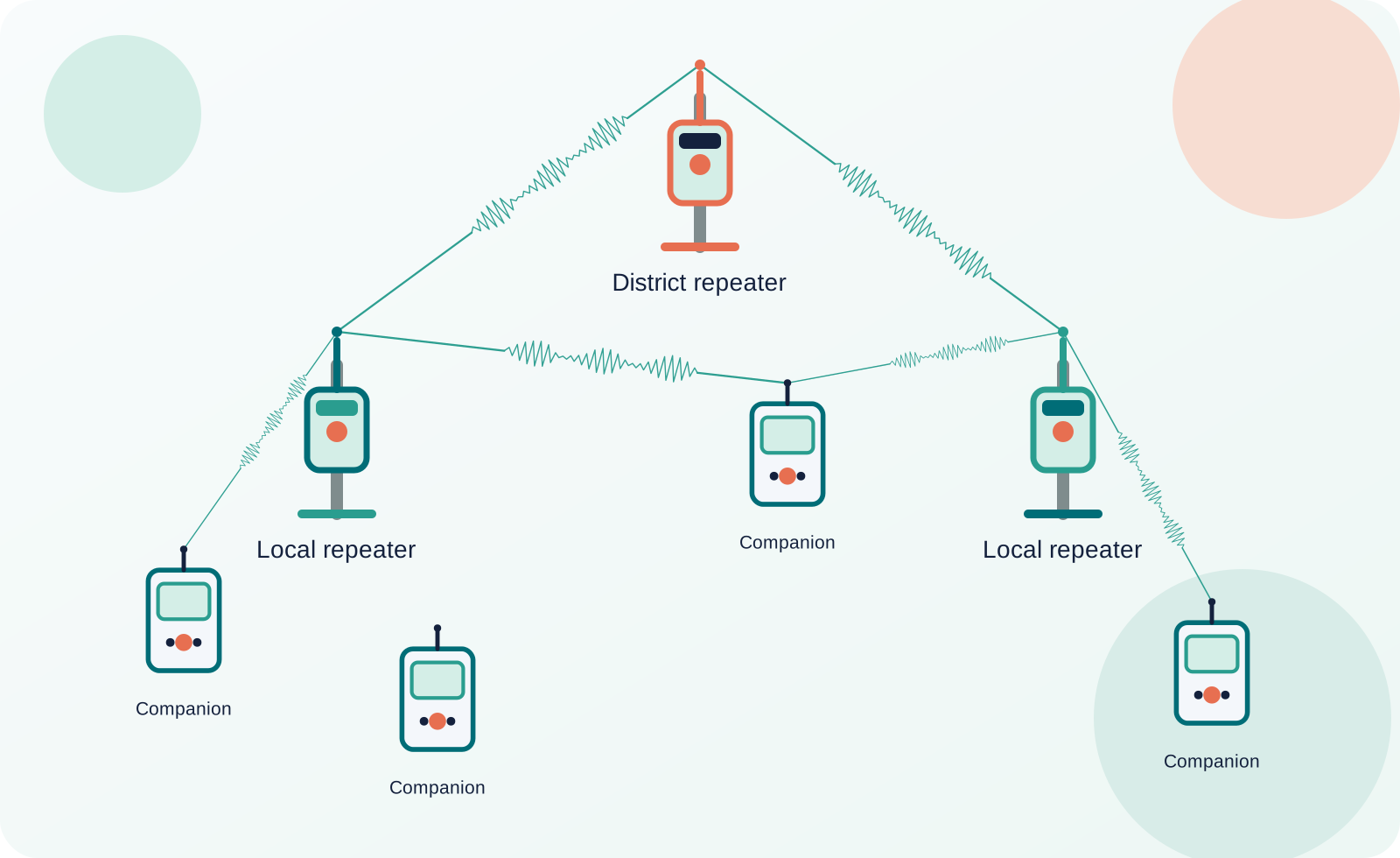
A simple way to think about it
Imagine people in two small groups, each with a helper in the middle, and one bigger helper above them both. The everyday devices talk to their nearby helper, and the bigger helper helps join the groups together.
That is the basic idea behind a mesh network.
Why people use it
- Emergency preparedness and local resilience
- Neighborhood coordination
- Community events and volunteer groups
- Learning and experimentation with local networking
What MeshCore is good for
MeshCore is most useful when the goal is simple local communication.
For example, people may use it to:
- let nearby volunteers share updates during an event
- coordinate around power, weather, or outage situations
- check in with a group when mobile coverage is poor or busy
- learn how local networks work in a practical, hands-on way
What users notice day to day
People do not need to think about the technical side to get value from it.
What they usually notice is:
- they can send short messages to people nearby
- the network may keep working even if one path has a problem
- messages can travel further because repeater nodes help carry them
- it can be easier to share updates within a local area than to rely on a distant service
What it is not
MeshCore is not a replacement for every phone call, text message, or internet service.
It is better thought of as an extra local communication option, especially useful when the normal options are not enough.
Why it matters
If you only care about the result, the short version is this: MeshCore helps people keep talking when they need a local backup path for communication.
That can be valuable for families, community groups, and emergency planning.
What to do next
Read about the Bunbury Network and then follow Get Connected.